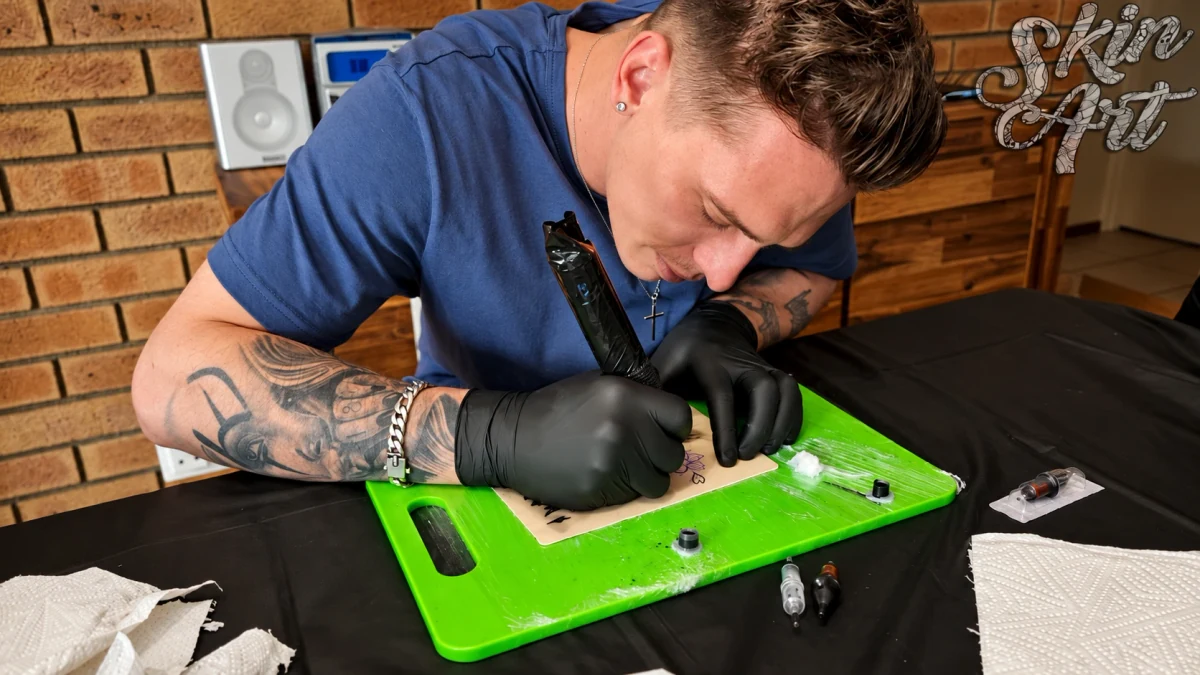
Fine-line is part of the main tattoo course
Fine-line tattooing is included in Skinart's main tattoo course. It sits alongside blackwork and tribal, black-and-grey shading, traditional colour, watercolour and realism. If delicate tattoos are your goal, you can build that interest while learning the design, equipment and hygiene foundations of tattooing.
Use this study plan to connect lessons with work you can review. It focuses on preparation and assigned practice, rather than giving machine settings or replacing a trainer's demonstrations.
Start with one drawing task
Choose a simple original design or a drawing exercise assigned by your tutor. Work at the size you intend to study. Look at the overall shape, the spacing between details and the points where lines meet. Keep an earlier version beside a simplified version so you can explain what changed.
For a floral sketch, for example, you might remove overlapping decorative lines before reviewing the remaining outline. For lettering, you might compare the spacing between characters. These are drawing decisions to discuss with your tutor, not evidence that a design is ready to tattoo on a client.
Connect the drawing to the lesson
Watch the relevant design, stencil or linework demonstration before choosing the corresponding practical task. Write down the question you want the lesson to answer. If an equipment choice or an instruction is unclear, ask the training team before improvising.
- Design question: which details make this drawing difficult to follow?
- Stencil question: what preparation does the assigned exercise require?
- Linework question: where do my attempts become less consistent?
- Equipment question: which materials match the course task?
Practise the assigned exercise, then review it
Follow the course's sequence and use the materials specified for the assignment. Keep drawing practice and synthetic-skin practice labelled separately. Start with the task your trainer sets rather than using a finished social-media tattoo as your only instruction.
Record the lesson, date and aim of each attempt. Photograph the full piece and the area you want help with, without edits that hide the issue. A short note such as These curves are uneven compared with the straight lines; what should I focus on next? makes your request easier to answer.
Plan a study rhythm you can repeat
Set aside separate time for learning, doing and reviewing. The length of each block depends on the assigned task and your circumstances. Keep the plan small enough to repeat, then adjust it when tutor feedback identifies a different priority.
- Learn: revisit the relevant demonstration and note one question.
- Do: complete the assigned drawing or practice-surface exercise.
- Record: keep an honest photograph and a brief description.
- Review: compare feedback with the next attempt before adding more detail.
The online body-art learning guide can help you fit that routine around studio work, family or another commitment.
Keep tattooing separate from cosmetic techniques
If you already work in piercing, permanent makeup or another body-art discipline, bring your learning habits with you while checking the tattoo-specific curriculum. A previous course does not automatically include the technique you are now choosing to study.
Fine-line tattooing belongs to the tattoo course. Microblading and scalp micropigmentation have their own subjects and practical requirements. Compare the course range before adding a second discipline; give each subject enough practice time.
Choose training with the full requirements in view
Check current regional prices, equipment arrangements, lesson access, assessment and support on the official tattoo course page. If you choose Pay As You Go, Part 1 is the first part of the course, rather than the entire programme. Ask where fine-line lessons sit in that sequence.
Course completion and permission to work with clients are separate matters. Keep hygiene and professional practice in your learning plan, and confirm the requirements for your intended activity and premises before offering a service. Drawing or synthetic-skin progress alone does not establish readiness to tattoo clients.
Review the online tattoo course guide, then use your region below to see the current Skinart enrolment options.