What this course is designed to teach
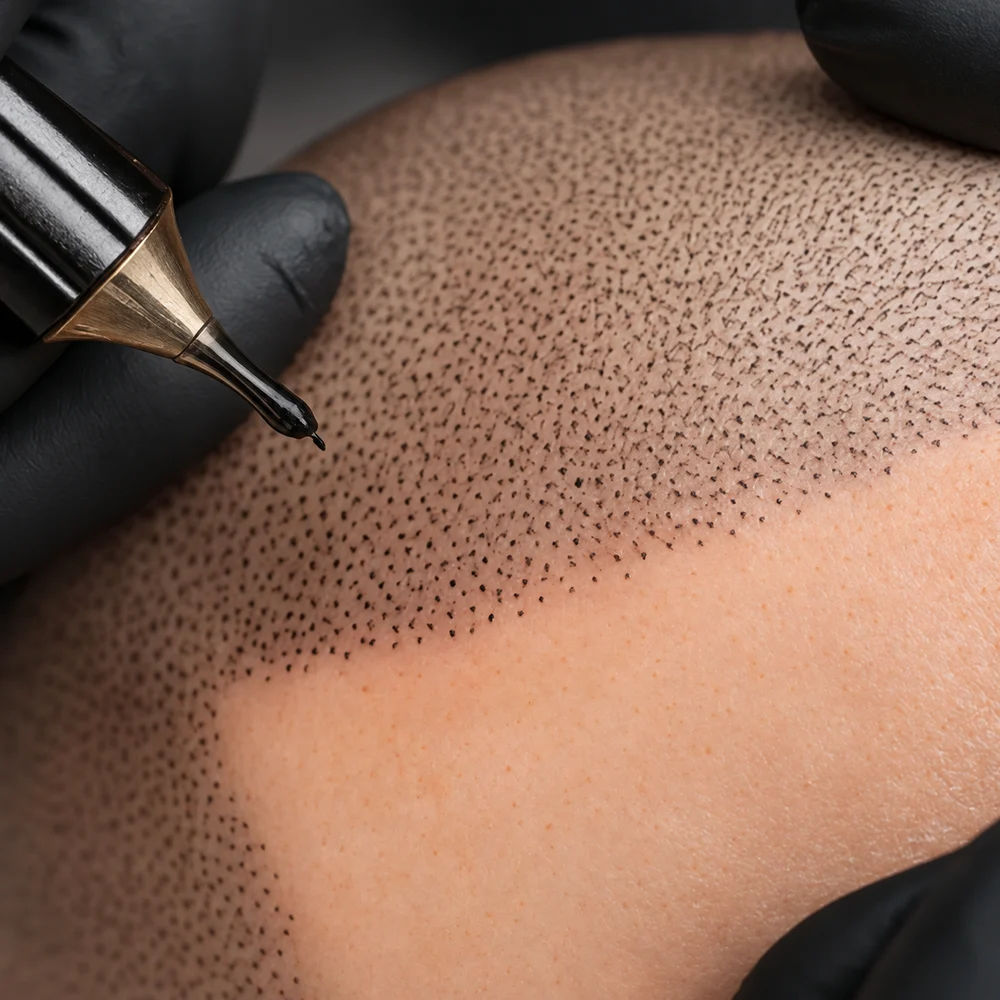
Scalp micropigmentation calls for careful consultation, conservative design and controlled impression patterns. Skinart’s course introduces the planning, equipment, pigment, hygiene and client-management foundations behind this specialist service.
Published subject coverage
The official Skinart materials describe the following learning areas. Lesson order and current assessment details are confirmed on the enrolment page.
- Client consultation, expectations, contraindication awareness and treatment planning.
- Scalp assessment, hair-loss patterns and appropriate service selection.
- Hairline design, facial balance and natural-looking planning.
- Pigment selection, equipment, needles and workstation preparation.
- Impression patterns, density building, spacing and practical development.
- Hygiene, aftercare, healing, records, photography and client management.
How online study helps
Lessons can be paused and replayed while you make notes, prepare equipment or repeat an exercise. That makes online learning particularly useful for technical subjects where small setup details matter and one classroom demonstration can be easy to miss.
Plan a useful learning routine
- Collect your own paper hairline sketches and note the design choices you want your trainer to review.
- Create a glossary for the scalp, pigment and equipment terms introduced in the lessons.
- Compare the stated practice materials and equipment with what you already own before buying more.
- For each assigned exercise, record the purpose, feedback and next practice target.
- Ask how design judgement and practical control are assessed before planning client services.
Questions learners ask
What should I compare when choosing SMP training?
Look for consultation, scalp assessment, hairline design, equipment and practical-development coverage. This guide also describes records, photography and client management, which help you understand the wider service workflow.
Does SMP training include hairline planning as well as technique?
The published subject coverage includes hairline design, facial balance and planning, alongside impression patterns, density building and spacing. Check the current course exercises and assessment rather than judging the training from a before-and-after photo alone.
How can I organise my SMP practice examples?
Record the assignment, date, design intention and the question you want your trainer to review. Photograph practice work consistently so comparisons are useful, and label it as practice rather than presenting it as a client result.
Can an SMP photograph predict the result I will achieve?
A photograph shows one example, not a promise of another result. Use course examples to frame questions about planning, practical development and assessment; confirm what the current course requires before offering the service.